

‘Will Likely Reduce VAT Gap’: Kenya Budget Deficit Challenge Gets $750 Million Support
A $750 million loan from the World Bank—aimed at strengthening governance, improving fiscal management, and expanding social protection—marks a positive step for Kenya’s reform agenda. Falling under the Development Policy Operation (DPO), the capital, which is split into a $340 million International Bank for Reconstruction and Development (IBRD) loan and $410 million highly concessional International …

A $750 million loan from the World Bank—aimed at strengthening governance, improving fiscal management, and expanding social protection—marks a positive step for Kenya’s reform agenda.
Falling under the Development Policy Operation (DPO), the capital, which is split into a $340 million International Bank for Reconstruction and Development (IBRD) loan and $410 million highly concessional International Development Association (IDA) financing, “will support Kenya’s budget directly,” says Fergus Kell, Research Fellow at Chatham House’s Africa Program, to FORBES AFRICA, but admits that “it is contingent upon the government having passed certain governance reforms such as conflict of interest regulations for elected officials.”
In a bid to reduce Kenya’s external finance reliance, the World Bank has incorporated a sustainability-linked credit facility that Leo Kemboi, Economist and Program Officer at the Institute of Economic Affairs (IEA Kenya), expects will focus on collection transparency.
“It will likely reduce the Value Added Tax (VAT) gap, collect Pay As You Earn (PAYE) contributions from non-filers, and encourage the use of eCitizen revenue,” he tells FORBES AFRICA.
As the country strives to open up previously strained liquidity channels, this will undoubtedly bolster its fiscal deficit momentum, dropping from 8.7% of GDP in 2021, according to Trading Economics, to around 6% in the recently ended 2025-2026 financial year.
Despite planning to use a large portion of the $750 million load on budget control, Kell reminds us that “some components of the funding are directed to support particular sectors, such as refugees; others will be tied to elements of the reform agenda, such as around public procurement systems”.
While taxpayers should expect tighter monetary surveillance, the same can be said for its public officials amid the nation’s corruption crackdown.
Introduced in 2025, the Conflict-of-Interest Regulations established a prevention and detection framework on illicit government gains, imposing stronger penalties and updating disclosure requirements.
If implemented effectively, Kemboi believes the latest DPO installment could be enough to close Kenya’s budget deficit, as the World Bank’s strings-attached loan resembles a shift in direction as to how global financial institutions are allocating funding to Africa.
The Daily Brief
Get the daily FORBES.NG briefing.
Comments (0)
Sign in to join the conversation.
Related Stories

Jesse Moore and M-KOPA’s Pay-As-You-Go Approach to Essential Services
M-KOPA’s pay-as-you-go model has connected consumer financing with access to products such as solar energy and smartphones, illustrating a distinct route to serving underbanked customers.

Benjamin Fernandes and NALA’s Cross-Border Fintech Ambition
Tanzanian founder Benjamin Fernandes built NALA around digital payments and international money movement, reflecting the opportunity and regulatory complexity of cross-border fintech.
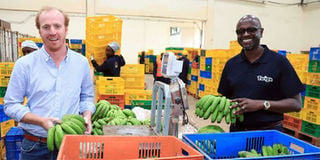
Grant Brooke and Twiga Foods’ Effort to Modernise Food Distribution
Twiga Foods co-founder Grant Brooke helped build a technology-enabled food distribution business in Kenya, bringing attention to the inefficiencies between producers, vendors and consumers.
More from Freddie Hiney
Zambia Prepares For El Niño After Previous Droughts Triggered Blackouts
The drought over two years ago had catastrophic consequences for Zambia’s energy security–a nation largely dependent on hydropower, generating over 80% of its electricity, according to government figures. As rivers dried up, the number of blackouts rose. The arriving El Niño—widely expected to become one of the strongest on record and anticipated to grapple the …
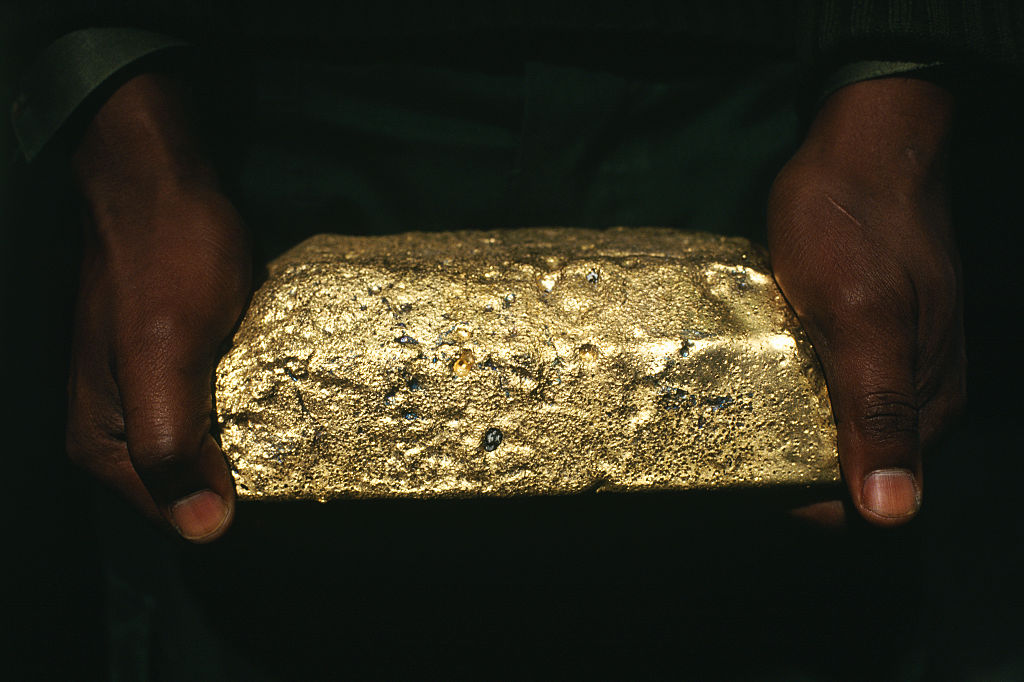
‘Thinking Five Years Ahead’: Ethiopia’s $50 Million Bet To Become Billion-Dollar Regional Gold And Metals Hub
Inaugurated on October 10, Ethiopia’s National Precious Metals Refinery coincides with gold’s rising importance for the nation of nearly 140 million people. According to the National Bank of Ethiopia, gold exports rose from $133.6 million in the fourth quarter (Q4) of 2023/24 to $1.29 billion in Q4 2024/25. Welcomed as Ethiopia’s first gold refinery, and …
Interest Rate Rises In South Africa, Experts Evaluate Possibility Of Recession
The financial toll of the ongoing global energy crisis is becoming increasingly apparent for Africa’s biggest economy. On Thursday, the South African Reserve Bank (SARB) announced its decision to increase the interest rate by 25 basis points to 7%, a week after year-on-year head inflation hiked to 4%, up from 3.1% in March. Offering some …
Recommended


The Daily Brief