

Botswana Eyes Alternative Markets; Expert Urges Continued Development Of Diamond Industry
The southern African nation is plotting economic diversification as it looks to counteract the challenges in its key industry. Diamonds account for approximately 80% of Botswana’s export revenue and 30% of its GDP, but dropping prices, spurred, in large part, by the rise of lab-grown stones, have exposed the economy’s vulnerability to market shocks. Now, …
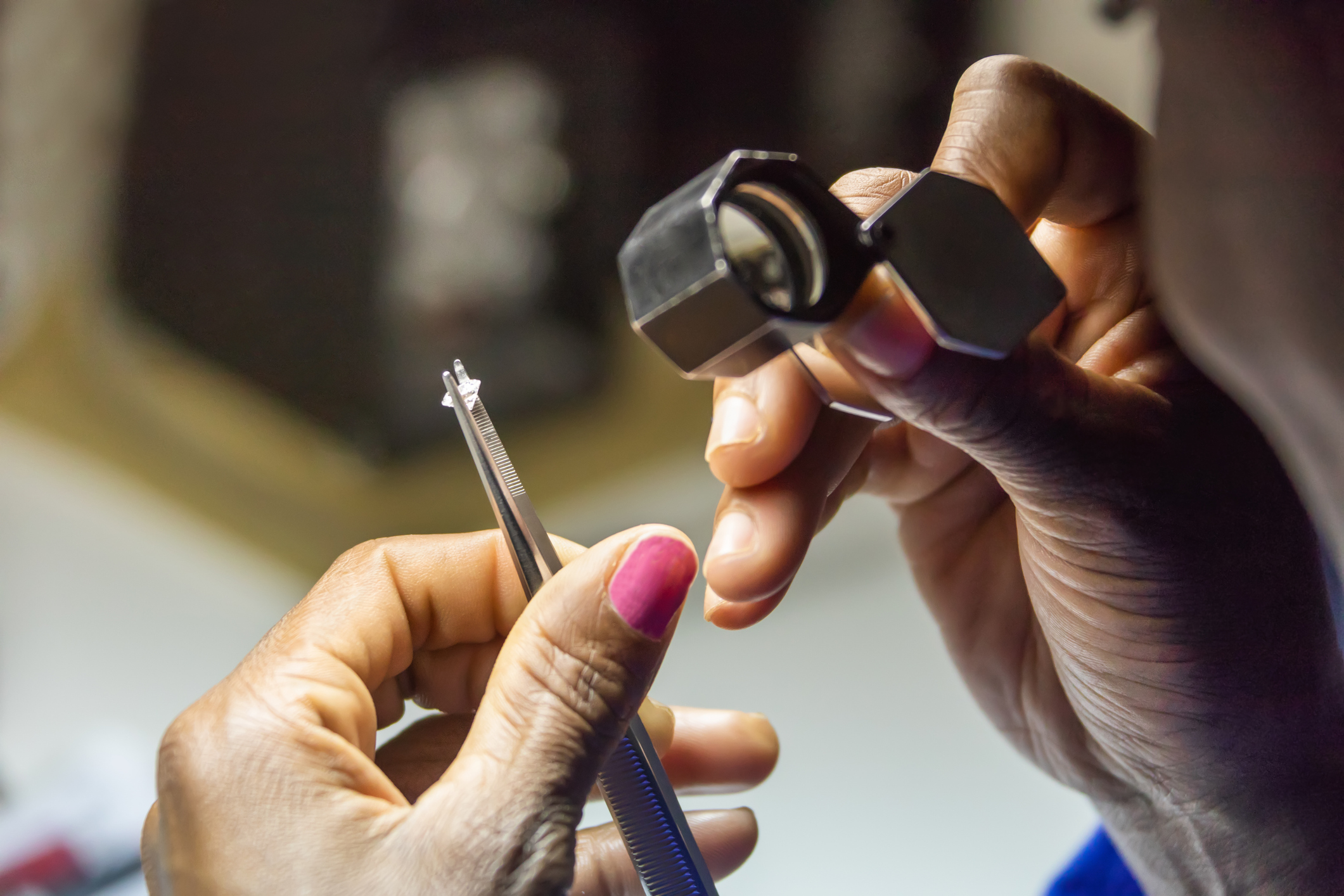
The southern African nation is plotting economic diversification as it looks to counteract the challenges in its key industry.
Diamonds account for approximately 80% of Botswana’s export revenue and 30% of its GDP, but dropping prices, spurred, in large part, by the rise of lab-grown stones, have exposed the economy’s vulnerability to market shocks. Now, the focus seems to be on value addition and diversification.
Eyeing alternative revenue streams underground, in early, July, the country’s Minister of Minerals and Energy, Bogolo Joy Kenewendo, announced the department’s goal of increasing non-diamond mineral exploration expenditure to roughly $11 million by 2029.
This comes amid momentum with the nation reportedly entering the final stages of establishing its first Manganese Mine after a feasibility test by Canadian-owned Giyani Metals confirmed economic viability.
In February, Kenewendo revealed that around 70% of its land remains unexplored, showcasing the untapped potential on offer.
While expanding mining operations is a priority for the nation, so, too, is beneficiation. Speaking at Gaborone’s Future of Mining Summit in late June, Mogakolodi Maoketsa, General Manager of Debswana Diamond Company, stressed the importance of local industrialization, believing it to be a value-added agenda that would benefit internal and external value chains.
“Mining companies can provide the initial market base needed for local manufacturers to grow, improve their capabilities, and eventually compete beyond the mining sector,” he said.
The view is that local procurement can lay the foundation for economic diversification, encouraging more capital to circulate, possibly uplifting everyone from the local shopkeeper to unemployed individuals, seeking work.
Offering on-the-ground insight, Charles Siwawa, CEO of the Botswana Chamber of Mines, reveals to FORBES AFRICA that all mining companies operating in the country have entered into an agreement that would support local manufacturing, but acknowledges that doing so would take time “due to various factors among them business acumen by potential investors, financial availability and access, ability to break into the market and so forth”.
Despite capital dictating the pace of development, he believes financial institutions have grown an appetite for manufacturing, sharing that progress has been made in Botswana’s “mining equipment manufacturing with tapping of the international market… The chemicals industry has also been tapped into locally with various manufacturers and suppliers at different levels of product range… Engineering services have also grown significantly”.
Looking at projected industry growth, Siwawa predicts the manufacturing sector, which he says currently contributes to 6.5% of Botswana’s GDP, could reach double-digit percentages in the coming years.
Though the nation is hoping to divert reliance on diamonds for economic growth, Dr Akisa Mwangi, Chairman of the Department of Mining, Materials and Petroleum at Jomo Kenyatta University of Agriculture and Technology, reminds FORBES AFRICA that, in this field, they have abundant reserves, established networks and institutional experience.
So, while Botswana’s diversification strategy should remain at full steam, it shouldn’t neglect what it already has.
“Since they already have a head start, implementing the right policy framework would make sure that they become the regional Diamond beneficiation hub… Value addition of the diamond will help in maximizing its economic value, lead to the creation of more jobs and skills development within the value chain,” Mwangi adds.
The Daily Brief
Get the daily FORBES.NG briefing.
Comments (0)
Sign in to join the conversation.
Related Stories

Jesse Moore and M-KOPA’s Pay-As-You-Go Approach to Essential Services
M-KOPA’s pay-as-you-go model has connected consumer financing with access to products such as solar energy and smartphones, illustrating a distinct route to serving underbanked customers.

Benjamin Fernandes and NALA’s Cross-Border Fintech Ambition
Tanzanian founder Benjamin Fernandes built NALA around digital payments and international money movement, reflecting the opportunity and regulatory complexity of cross-border fintech.

Grant Brooke and Twiga Foods’ Effort to Modernise Food Distribution
Twiga Foods co-founder Grant Brooke helped build a technology-enabled food distribution business in Kenya, bringing attention to the inefficiencies between producers, vendors and consumers.
More from Freddie Hiney

Zambia Prepares For El Niño After Previous Droughts Triggered Blackouts
The drought over two years ago had catastrophic consequences for Zambia’s energy security–a nation largely dependent on hydropower, generating over 80% of its electricity, according to government figures. As rivers dried up, the number of blackouts rose. The arriving El Niño—widely expected to become one of the strongest on record and anticipated to grapple the …

‘Thinking Five Years Ahead’: Ethiopia’s $50 Million Bet To Become Billion-Dollar Regional Gold And Metals Hub
Inaugurated on October 10, Ethiopia’s National Precious Metals Refinery coincides with gold’s rising importance for the nation of nearly 140 million people. According to the National Bank of Ethiopia, gold exports rose from $133.6 million in the fourth quarter (Q4) of 2023/24 to $1.29 billion in Q4 2024/25. Welcomed as Ethiopia’s first gold refinery, and …

Interest Rate Rises In South Africa, Experts Evaluate Possibility Of Recession
The financial toll of the ongoing global energy crisis is becoming increasingly apparent for Africa’s biggest economy. On Thursday, the South African Reserve Bank (SARB) announced its decision to increase the interest rate by 25 basis points to 7%, a week after year-on-year head inflation hiked to 4%, up from 3.1% in March. Offering some …
Recommended


The Daily Brief