

‘A Key Growth Area’: A Look At The JSE’s Changing ETF Landscape
South Africa’s Johannesburg Stock Exchange (JSE) is the undisputed capital market leader on the continent. According to a 2026 list by Daba Intelligence, its $1.5 trillion market value is more than the other 16 tracked bourses combined. Overall, the continent’s exchanges collectively amount to $2.03 trillion. Eliminating any notion of complacency, a recent report by …
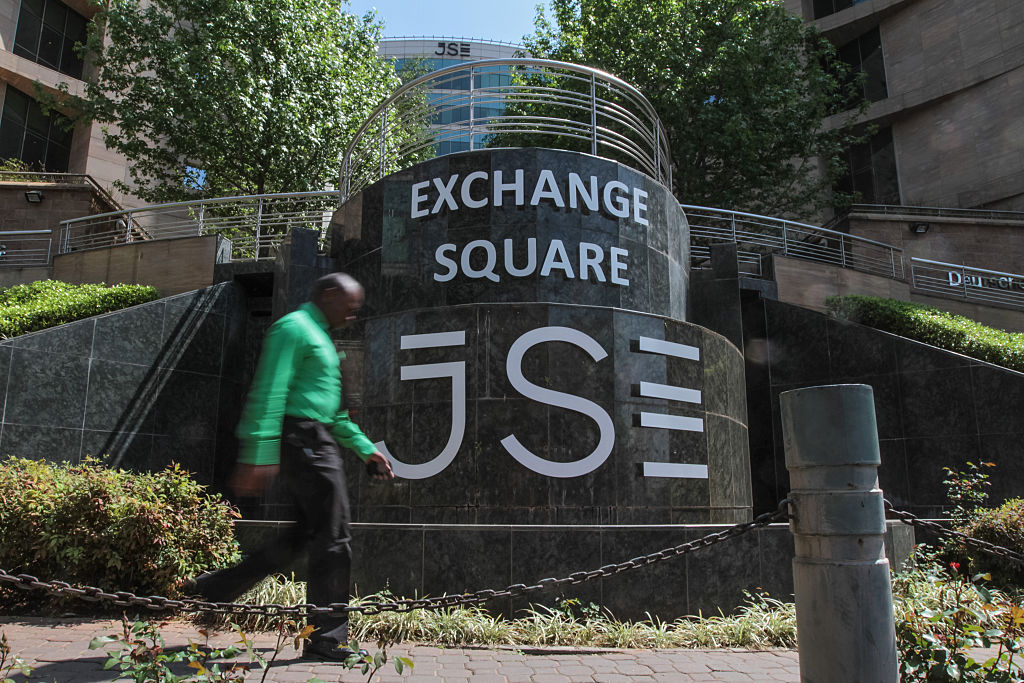
South Africa’s Johannesburg Stock Exchange (JSE) is the undisputed capital market leader on the continent. According to a 2026 list by Daba Intelligence, its $1.5 trillion market value is more than the other 16 tracked bourses combined. Overall, the continent’s exchanges collectively amount to $2.03 trillion.
Eliminating any notion of complacency, a recent report by Cape Town-based Prescient Fund Services shows a growing adoption by the JSE of Exchange-Traded Funds (ETFs) and, more recently, Actively Managed Exchange-Traded Funds (AMETFs).
ETFs track mostly specific indexes, whether it be a basket of gold miners or the JSE Top 40, which provides exposure to South Africa’s 40 largest listed companies by value, while AMETFs are managed by asset managers reacting to changing market conditions and opportunities.
By diversifying portfolios, they’re widely seen as effective avenues for spreading risk. Another key ETF offering is commodities, the likes of gold, uranium and copper, without having to physically own them.
“As the ETF ecosystem expands, investors gain more practical ways to start investing, learn by doing and build resilient portfolios through products that are easier to understand, easier to access and supported by transparent, ongoing disclosure,” said Adèle Hattingh, Business Development and Exchange Traded Products Manager at the JSE, in a statement earlier this year.
They offer broader capital streams, and it appears the JSE is in the process of capitalizing. The 2026 Prescient ETF Evolution Report shows that over 100 ETFs—exceeding $12 billion in market capitalization—were listed by 2024. Currently, the tally is around 141 at $16.5 billion.
Meanwhile, the number of AMETFs rose from 10 in August 2024 to 52 by the end of August 2026, attracting $1.5 billion.
Having effectively carved out its own product category, “Income-focused AMETFs are likely to remain one of the key growth areas as South African investors continue to seek yield, stability and capital preservation,” the report read.
Speaking to FORBES AFRICA, Ben Meyer, Managing Director at Prescient Capital Markets, links ETF and AMETF growth, in part, to the emergence of local neo-brokers, digital-first investment platforms that have “reduced the barriers to entry, making it easier for first-time and younger investors to begin investing”.
Given that the average trading value of AMETFs was $2.4 million per day at the end of August 2026, compared to nearly $34 million per day for ETFs, there seems to be a clear favorite amongst investors, but Niki Giles, Head of Strategy at Prescient Fund Services, argues that the former has just scratched the surface.
“The opportunity is not just about adding more products in aggregate. It is about depth within each asset class,” she tells FORBES AFRICA.
“In many categories, investors and advisers currently have only one or two AMETF options to choose between. That is not really a market; it is a starting point,” Giles adds, pointing out that there are more than 1,000 unlisted collective investment schemes available to South African investors, most of which are actively managed.
With ETFs already established, AMETFs present another opportunity for the JSE to significantly deepen liquidity and better insulate itself from market shocks.
Asked about the ripple effects that higher trading volumes could have on the South African economy, Meyer says that, alongside enhancing the attractiveness of South Africa’s capital markets, “The growth of ETFs and AMETFs can support a broader culture of saving and long-term investing. South Africa faces a well-documented need to improve household savings rates and increase participation in investment markets.”
The Daily Brief
Get the daily FORBES.NG briefing.
Comments (0)
Sign in to join the conversation.
Related Stories

Jesse Moore and M-KOPA’s Pay-As-You-Go Approach to Essential Services
M-KOPA’s pay-as-you-go model has connected consumer financing with access to products such as solar energy and smartphones, illustrating a distinct route to serving underbanked customers.

Benjamin Fernandes and NALA’s Cross-Border Fintech Ambition
Tanzanian founder Benjamin Fernandes built NALA around digital payments and international money movement, reflecting the opportunity and regulatory complexity of cross-border fintech.

Grant Brooke and Twiga Foods’ Effort to Modernise Food Distribution
Twiga Foods co-founder Grant Brooke helped build a technology-enabled food distribution business in Kenya, bringing attention to the inefficiencies between producers, vendors and consumers.
More from Freddie Hiney

Zambia Prepares For El Niño After Previous Droughts Triggered Blackouts
The drought over two years ago had catastrophic consequences for Zambia’s energy security–a nation largely dependent on hydropower, generating over 80% of its electricity, according to government figures. As rivers dried up, the number of blackouts rose. The arriving El Niño—widely expected to become one of the strongest on record and anticipated to grapple the …

‘Thinking Five Years Ahead’: Ethiopia’s $50 Million Bet To Become Billion-Dollar Regional Gold And Metals Hub
Inaugurated on October 10, Ethiopia’s National Precious Metals Refinery coincides with gold’s rising importance for the nation of nearly 140 million people. According to the National Bank of Ethiopia, gold exports rose from $133.6 million in the fourth quarter (Q4) of 2023/24 to $1.29 billion in Q4 2024/25. Welcomed as Ethiopia’s first gold refinery, and …

Interest Rate Rises In South Africa, Experts Evaluate Possibility Of Recession
The financial toll of the ongoing global energy crisis is becoming increasingly apparent for Africa’s biggest economy. On Thursday, the South African Reserve Bank (SARB) announced its decision to increase the interest rate by 25 basis points to 7%, a week after year-on-year head inflation hiked to 4%, up from 3.1% in March. Offering some …
Recommended


The Daily Brief