

Women Founders Face Funding and Growth Challenges
Women-led businesses continue to navigate barriers to capital, networks and scaling; reliable local data is essential to measure the gap.


Women entrepreneurs contribute to employment, innovation and economic activity across sectors, but many founders continue to navigate barriers when raising capital, building professional networks and expanding their businesses. The scale of these challenges varies by country, industry and company stage. A clear account of the gap therefore requires recent, comparable data rather than assuming that every founder has the same experience.
Access to finance is often central to the growth challenge. Early-stage companies may need money to hire staff, purchase equipment, develop products or enter new markets. Founders without established investor networks can find it harder to secure introductions, while businesses with limited collateral or short credit histories may face additional hurdles when approaching lenders. The relative importance of these factors differs across markets, making local evidence essential.
Funding is only one part of building a sustainable company. Entrepreneurs also need access to customers, skilled employees, mentors, procurement opportunities and professional advice. A business can secure an initial investment and still struggle to scale if it cannot reach new buyers, manage cash flow or recruit people with the right expertise. Support programmes are most useful when they respond to these practical needs rather than focusing only on the number of businesses enrolled.
Investors and policymakers can help assess progress by publishing transparent information about who applies for funding, who receives it, how much capital is awarded and what happens to companies over time. Comparisons should account for differences in sector, business age, revenue and funding stage. Without consistent data, it is difficult to determine whether an initiative is reducing barriers or simply serving companies that were already well positioned to grow.
Founders can also strengthen their readiness for investment by maintaining clear financial records, developing a realistic growth plan and documenting how additional capital will be used. These steps do not remove structural barriers or guarantee funding, but they can help investors and lenders evaluate a company's performance and needs. Building relationships with customers, industry groups and experienced advisers can provide additional routes to market knowledge and business support.
Organisations that want to improve access should evaluate outcomes, not just intentions. Useful measures include the diversity of applicants, approval rates, the size and terms of investments, business survival and subsequent growth. Mentorship and networking programmes should also be assessed for whether they lead to meaningful customer introductions, partnerships or financing opportunities.
This draft is a general analysis, not a fully reported account of a new initiative. Before publication as a news feature, it should include current data from credible research, specific examples of women-led businesses and attributable interviews with founders, investors or policymakers. That evidence would help explain which barriers are most significant in the market being covered and which interventions are producing measurable results.
The Daily Brief
Get the daily FORBES.NG briefing.
Comments (0)
Sign in to join the conversation.
Related Stories

Jesse Moore and M-KOPA’s Pay-As-You-Go Approach to Essential Services
M-KOPA’s pay-as-you-go model has connected consumer financing with access to products such as solar energy and smartphones, illustrating a distinct route to serving underbanked customers.

Benjamin Fernandes and NALA’s Cross-Border Fintech Ambition
Tanzanian founder Benjamin Fernandes built NALA around digital payments and international money movement, reflecting the opportunity and regulatory complexity of cross-border fintech.
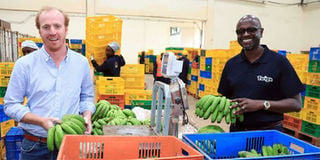
Grant Brooke and Twiga Foods’ Effort to Modernise Food Distribution
Twiga Foods co-founder Grant Brooke helped build a technology-enabled food distribution business in Kenya, bringing attention to the inefficiencies between producers, vendors and consumers.
More from Adaeze Okafor
Jesse Moore and M-KOPA’s Pay-As-You-Go Approach to Essential Services
M-KOPA’s pay-as-you-go model has connected consumer financing with access to products such as solar energy and smartphones, illustrating a distinct route to serving underbanked customers.
Benjamin Fernandes and NALA’s Cross-Border Fintech Ambition
Tanzanian founder Benjamin Fernandes built NALA around digital payments and international money movement, reflecting the opportunity and regulatory complexity of cross-border fintech.
Grant Brooke and Twiga Foods’ Effort to Modernise Food Distribution
Twiga Foods co-founder Grant Brooke helped build a technology-enabled food distribution business in Kenya, bringing attention to the inefficiencies between producers, vendors and consumers.
Recommended


The Daily Brief