

‘African Cinema Can Dream At Scale’: Nigerian Crime Film Sets Guinness Record
Nigerian crime thriller Black Market has set a Guinness World Records mark for the largest attendance at a film screening, drawing 51,258 people to the commercial capital Lagos’ Tafawa Balewa Square (TBS) on September 26. The record was achieved by filmmakers Damilola Osikoya, Switch Visual Limited, Nora Awolowo and Rixel Studios for the screening of …
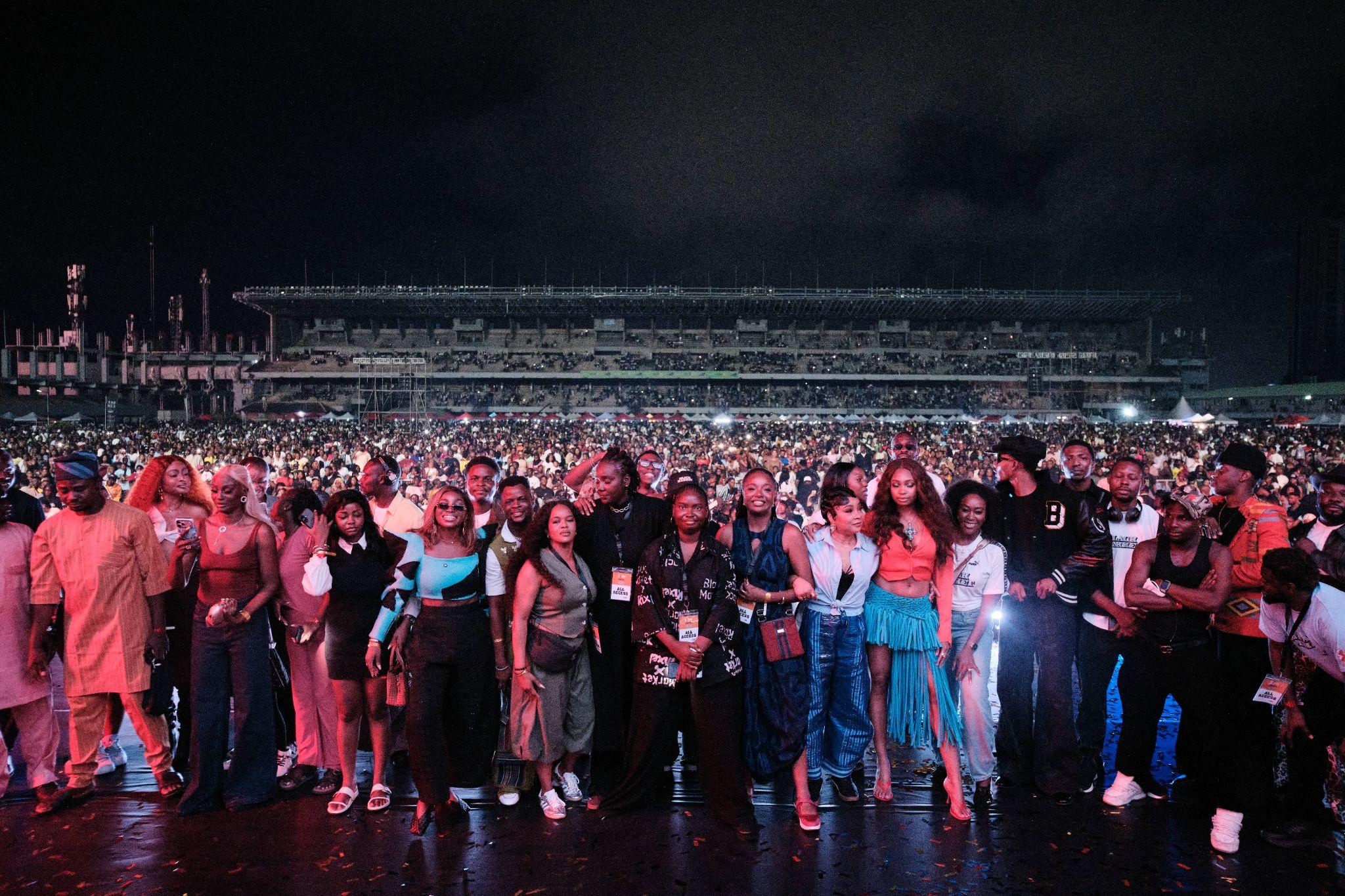
Nigerian crime thriller Black Market has set a Guinness World Records mark for the largest attendance at a film screening, drawing 51,258 people to the commercial capital Lagos’ Tafawa Balewa Square (TBS) on September 26.
The record was achieved by filmmakers Damilola Osikoya, Switch Visual Limited, Nora Awolowo and Rixel Studios for the screening of the 90-minute film, Guinness World Records said. To qualify, attendees had to remain at the screening from start to finish.
The turnout surpassed the previous record of 43,624 people, set in the Philippines in 2015 for Felix Manalo, by 7,634 attendees, or about 17.5%.
The feat comes as Nigeria’s theatrical film market grows in revenue, although audience numbers have risen more slowly.
Box-office revenue across Anglophone West Africa reached about ₦15.6 billion ($10.27 million in then exchange rate) in 2025, up from ₦11.6 billion ($7.56 million then) in 2024, according to the 2025 Nigeria Box Office Yearbook compiled by FilmOne. Admissions rose to about 2.8 million from 2.7 million, while the number of cinema locations increased to 122 from 107.
Average ticket prices, meanwhile, have risen sharply in local currency. Industry data put the average at about ₦5,959 ($3.69 then) in 2025, compared with ₦1,512 ($3.75 then) in 2021, while annual admissions remained below 2021 levels.
Nora Awolowo, Creative Lead at Rixel Studios, says the Guinness record demonstrates that Nigerian filmmakers could organize entertainment events on a scale comparable with major international productions.
“This proves that African cinema can dream at scale, challenge global conventions, and execute at the highest international level,” Awolowo shares with FORBES AFRICA.
She says, however, that a mass screening of the size held in Lagos is not a straightforward alternative to
conventional cinemas or streaming services.
The event required extensive crowd management, infrastructure, electricity, production and partner activations, she says, making such screenings difficult to stage frequently.
At the same time, Awolowo says mega-screenings could offer a collective cultural experience that conventional cinema and streaming could not easily reproduce.
“Screenings at this scale unite the community, generate massive excitement, and establish alternative event-based distribution models for milestone cinematic projects,” she says, comparing them with concerts and fashion shows.
The event’s official registration page advertised general admission at about ₦2,000 ($1.51) and a premium category at ₦50,000 ($37.75).
The screening was developed with Rixel Studios, Switch Visuals and other industry partners, while FilmOne handled distribution, according to industry reports. Corporate partners and the Lagos State Government were also associated with the event.
FilmOne’s 2025 market data showed that Nigeria had 118 of 122 cinema locations and 352 of 369 screens across the wider Anglophone West African market, making the West African nation account for the vast majority of the territory’s box-office business.
Lagos generated about ₦7.94 billion ($5.5 million then) in box-office revenue from 41 cinema locations and 1.28 million admissions in 2025, according to the data.
Nigeria’s film production pipeline has also remained active. The National Film and Video Censors Board (NFVCB) reported that 304 films were classified between January and April 2026, compared with 267 in the same period a year earlier.
Awolowo says Black Market would receive a theatrical release before moving to streaming platforms.
Directed by Fatimah Binta Gimsay and written by Abdul Tijani-Ahmed alongside Gimsay, the film follows five market women running a cross-border smuggling operation amid fuel shortages and economic pressure. Their business is disrupted when a rival kidnaps the daughter of one of the women, forcing the group into a struggle over survival and loyalty.
The Daily Brief
Get the daily FORBES.NG briefing.
Comments (0)
Sign in to join the conversation.
Related Stories

Jesse Moore and M-KOPA’s Pay-As-You-Go Approach to Essential Services
M-KOPA’s pay-as-you-go model has connected consumer financing with access to products such as solar energy and smartphones, illustrating a distinct route to serving underbanked customers.

Benjamin Fernandes and NALA’s Cross-Border Fintech Ambition
Tanzanian founder Benjamin Fernandes built NALA around digital payments and international money movement, reflecting the opportunity and regulatory complexity of cross-border fintech.

Grant Brooke and Twiga Foods’ Effort to Modernise Food Distribution
Twiga Foods co-founder Grant Brooke helped build a technology-enabled food distribution business in Kenya, bringing attention to the inefficiencies between producers, vendors and consumers.
More from Oluwatomisin Amokeoja
Africa’s Richest Man Confirms September London Secondary Listing Plans For Cement Behemoth
Dangote Cement, listed in Nigeria’s commercial capital Lagos, has a market capitalization of over $12 billion after its shares more than doubled over the past year. Africa’s richest man Aliko Dangote plans a secondary listing of his cement business in London in September, reviving long-standing plans to bring the continent’s largest cement producer to international …

First Nigerian Artiste With Two Grammys Performs Before Four Former U.S. Presidents At Obama Center Opening
Nigerian musician Tems joined a lineup that included Bono, The Edge, Bruce Springsteen, Christina Aguilera, Common, Eddie Vedder, Jennifer Hudson, John Legend, Marc Anthony, Stevie Wonder, The Roots and Marsai Martin at the opening ceremony. Nigerian Grammy-winning singer Tems recently performed her hit song Me & U before former United States (U.S.) President Barack Obama, former First Lady Michelle Obama and a global audience at the …

$25 Million Push For New Maternal Health Digital Initiative In Nigeria
MTN Group Foundation and the Gates Foundation have launched a $25 million partnership aimed at expanding digital access to maternal health services in Nigeria, seeking to reach 500,000 women, 5,000 frontline health workers and 500 primary healthcare facilities by 2030. The four-year Nigeria Maternal Health Multiplier will combine artificial-intelligence-enabled decision-support tools, affordable smartphones and mobile …
Recommended




The Daily Brief