

The South African Scientist Championing AI That’s Africa-Led
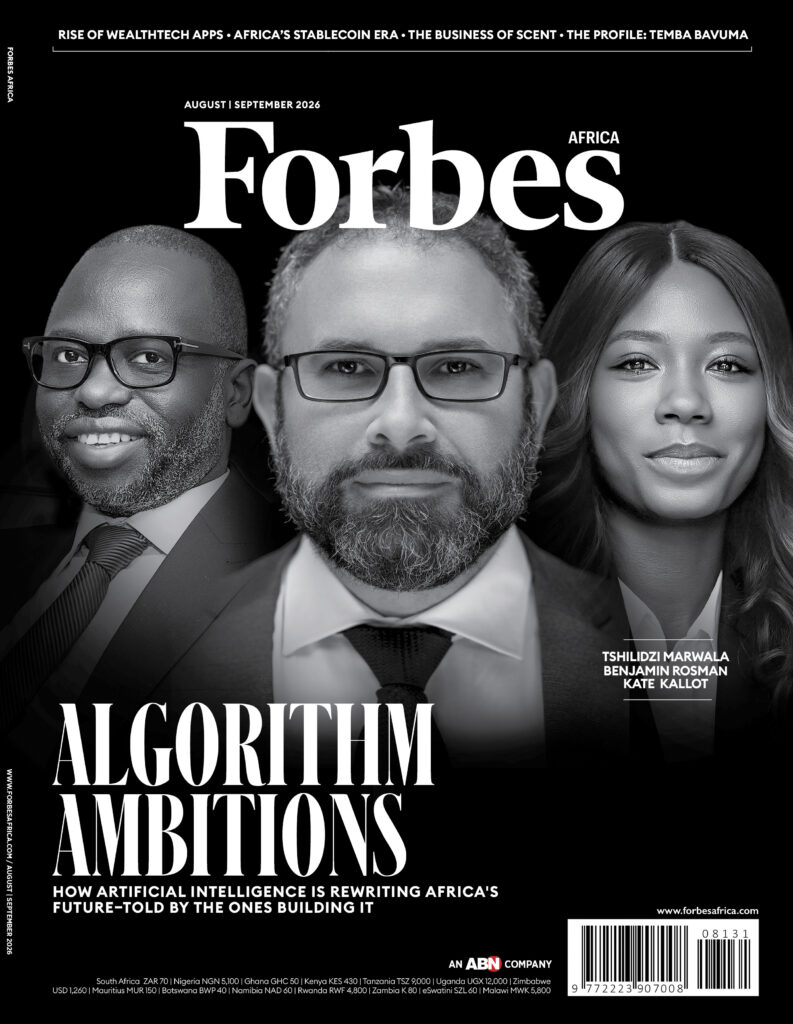
Benjamin Rosman, one of TIME’s 100 Most Influential People in AI in 2025, tells FORBES AFRICA that he actually “stumbled” into AI, at the end of his undergraduate studies. “There was a course we had that touched on some ideas, very loosely, in artificial intelligence, and I was really excited about that,” says Rosman, now a Professor …

Benjamin Rosman, one of TIME’s 100 Most Influential People in AI in 2025, tells FORBES AFRICA that he actually “stumbled” into AI, at the end of his undergraduate studies.
“There was a course we had that touched on some ideas, very loosely, in artificial intelligence, and I was really excited about that,” says Rosman, now a Professor at the School of Computer Science and Applied Mathematics at the University of the Witwatersrand (Wits) in South Africa.
“I attribute this to my philosophy that you’ve always got to do the coolest thing you can with the coolest people you can find–that’s where it ended up.”
Rosman, who runs the Robotics, Autonomous Intelligence and Learning (RAIL) Laboratory at Wits, also became the founding Director of the Machine Intelligence and Neural Discovery (MIND) Institute in 2024, focusing on the fundamental science of intelligence in machines, humans, and animals.
As central as his work is in the classroom, he has long been an advocate for taking the AI conversation beyond academia, while ensuring Africa is an active participant in shaping it.
As one of the founders of Lelapa AI, a resource-efficient AI system that includes small language models tailored to African languages, dialects and real-world environments, he believes that “it’s important that technical expertise is sitting in every place in every community”.
He also co-founded the Deep Learning Indaba, a summer school that focuses on strengthening machine learning across the continent and, now, has satellite events in around 47 countries.
“It’s really important that AI is not just a conversation that happens elsewhere and is imported here,” Rosman says.
“By the same token, building the technology itself is a very technical thing, but the way it interfaces with society in so many ways depends on society. It shouldn’t depend on computer scientists.”
Last year, the South African scientist was appointed a fellow at the prestigious CIFAR (Canadian Institute for Advanced Research), in Learning in Machines and Brains.
The Daily Brief
Get the daily FORBES.NG briefing.
Comments (0)
Sign in to join the conversation.
Related Stories

Businesses Are Investing in AI but Struggling to Measure Its Returns
Turning AI pilots into measurable business value requires clear objectives, reliable baselines and disciplined oversight.

Why Businesses Need More Than AI Tools to Compete
Technology alone does not guarantee business results; strategy, staff capability, trustworthy data and measurable goals shape the value of AI.

AI Agents Could Transform Digital Payments, but Trust Remains Essential
Automated tools may streamline payment journeys, but security, consumer consent and clear accountability will shape adoption.
More from Chanel Retief

South Africa’s Busiest Economic Hub Faces Looming Tariff Shock, Placing Additional Pressure On Business
Topline: Yesterday, Johannesburg’s Finance Member of the Mayoral Committee (MMC) and Deputy Mayor Loyiso Masuku announced tariff increases across water, electricity, sanitation and property rates. According to the MMC, electricity is set to increase by 8.6%, property rates by 3.6% and water and sanitation in South Africa’s busiest economic hub by 11%. Key Facts: What …

The South African Production Company Reviving VHS Tapes As A ‘Deliberate Middle Finger To AI’
Production company, And Films recently announced the upcoming release of feature film, This Is How The World Ends, which will debut on VHS, marking it as one of the first worldwide straight-to-VHS releases in 20 years. The creative economy accounts for approximately $2.3 trillion annually, representing roughly 3.1% of global Gross Domestic Product (GDP). …
Next Gen Goes Green: How Africa’s Youth Are Leading The Charge
Young people are key to cultivating a more sustainable and healthier planet. This is evident across Africa as the youth lead the way in developing innovative solutions for the continent’s challenges. FORBES AFRICA speaks to some of the brightest minds about why they believe even more young people need to step forward and play an active role. …
Recommended


The Daily Brief