

South Africa’s Busiest Economic Hub Faces Looming Tariff Shock, Placing Additional Pressure On Business
Topline: Yesterday, Johannesburg’s Finance Member of the Mayoral Committee (MMC) and Deputy Mayor Loyiso Masuku announced tariff increases across water, electricity, sanitation and property rates. According to the MMC, electricity is set to increase by 8.6%, property rates by 3.6% and water and sanitation in South Africa’s busiest economic hub by 11%. Key Facts: What …
Topline:
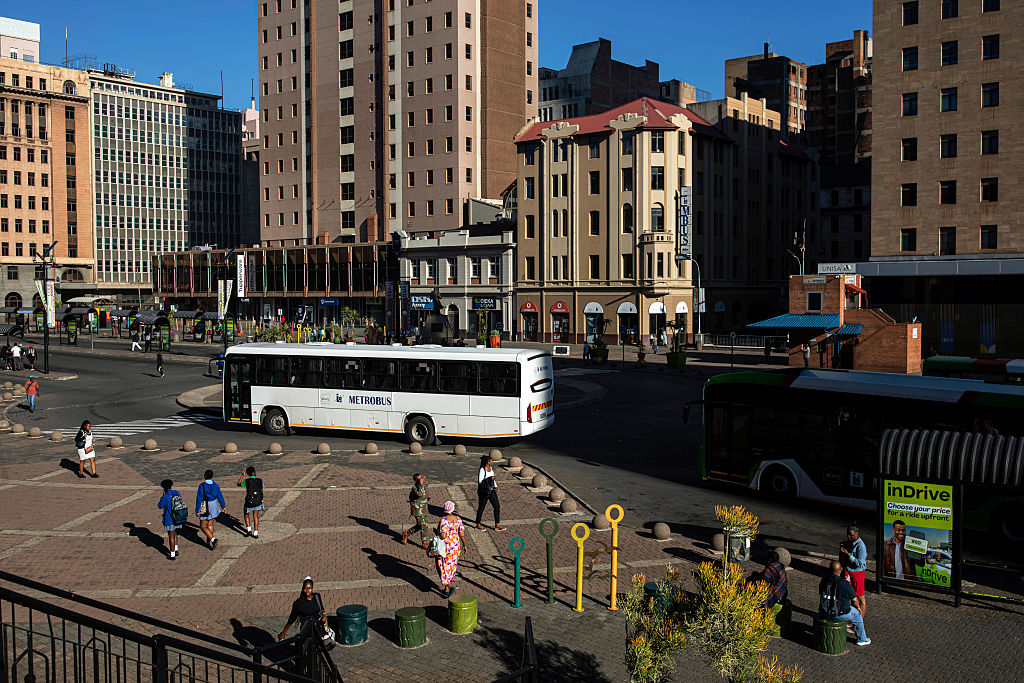
Yesterday, Johannesburg’s Finance Member of the Mayoral Committee (MMC) and Deputy Mayor Loyiso Masuku announced tariff increases across water, electricity, sanitation and property rates. According to the MMC, electricity is set to increase by 8.6%, property rates by 3.6% and water and sanitation in South Africa’s busiest economic hub by 11%.
Key Facts:
- Masuku announced these tariff increases at the tabling of Johannesburg’s R97.1 billion ($5.39 billion) budget for the 2026/27 financial year in council.
- According to reports, Johannesburg will have to rely on key revenue drivers to keep the city operational. The revenue streams for the 2026/2027 cycle are projected to include electricity at R27.8 billion ($1.54 billion), water and waste water at R21.5 billion ($1.19 billion), property rates at R18.8 billion ($1.04 billion) and refuse removal at R3.6 billion ($200 million).
- “We do not raise tariffs lightly,” Masuku told city councillors on Wednesday. “The problem is not the absence of plans but the persistent failure to convert them into measurable outcomes. The city manager must and should assist in leading an integrated implementation model and align departments and entities, service delivery priorities through measurable outcomes.”
- The vote for the proposed budget is set to take place today in the city.
What this means for Johannesburg?
With over 6 million residents in the city, the Organisation Undoing Tax Abuse (OUTA) said in a statement that Johannesburg’s financial and governance decline will not be resolved through vague intervention announcements alone.
“The reality is that Johannesburg residents and businesses cannot continue becoming collateral damage for years of municipal financial mismanagement and governance decline,” Julius Kleynhans, OUTA’s Executive Manager said. “The fact that government is now publicly acknowledging that paying residents cannot carry the consequences of municipal failure marks an important shift.”
Impact on small business:
The hike in tariffs will hit businesses hard, say entrepreneurs.
Speaking to FORBES AFRICA, Mas’ooda Varachia, CEO of USS Raven and Habibee Honey, says the increase will place additional financial pressure, with higher operational costs for electricity, water, transport, and municipal services. She worries too about the higher costs of commuting for her employees traveling from various communities across Johannesburg.
“Do we start moving towards a hybrid approach allowing them to work from home a few days a week to ease their financial strain?” she asks. “In the long-term, businesses may need to reassess pricing structures, operational efficiencies, and investment plans to remain sustainable.”
Avian Bell, CEO at Quantumed, also based in Johannesburg, adds that for the small and medium-sized enterprise (SME) sector, the latest city tariff increases are becoming increasingly difficult to absorb in an already-constrained economic environment.
Bell further states that electricity remains the single biggest concern for SMEs operationally, but it is the cumulative effect of all municipal and infrastructure-related increases that is placing growing pressure on businesses.
“Over the past few years, Johannesburg has seen approximately a 15%-20% increase in our operating costs purely from fixed operational expenses, excluding additional investments and contingency infrastructure we have had to implement to maintain business continuity,” says Bell.
“As a business, we have already had to make difficult adjustments… These include increasing pricing to end users, reducing discretionary spending, delaying and minimizing certain product and operational investments and actively working to reduce our reliance on municipal infrastructure where possible.”
The Daily Brief
Get the daily FORBES.NG briefing.
Comments (0)
Sign in to join the conversation.
Related Stories

Businesses Are Investing in AI but Struggling to Measure Its Returns
Turning AI pilots into measurable business value requires clear objectives, reliable baselines and disciplined oversight.

Why Businesses Need More Than AI Tools to Compete
Technology alone does not guarantee business results; strategy, staff capability, trustworthy data and measurable goals shape the value of AI.

AI Agents Could Transform Digital Payments, but Trust Remains Essential
Automated tools may streamline payment journeys, but security, consumer consent and clear accountability will shape adoption.
More from Chanel Retief

The South African Production Company Reviving VHS Tapes As A ‘Deliberate Middle Finger To AI’
Production company, And Films recently announced the upcoming release of feature film, This Is How The World Ends, which will debut on VHS, marking it as one of the first worldwide straight-to-VHS releases in 20 years. The creative economy accounts for approximately $2.3 trillion annually, representing roughly 3.1% of global Gross Domestic Product (GDP). …

Next Gen Goes Green: How Africa’s Youth Are Leading The Charge
Young people are key to cultivating a more sustainable and healthier planet. This is evident across Africa as the youth lead the way in developing innovative solutions for the continent’s challenges. FORBES AFRICA speaks to some of the brightest minds about why they believe even more young people need to step forward and play an active role. …
Turning Leaves Into Leverage: Brewing Impressive Returns In Rwanda
Rwanda is famous for coffee, but tea is fast emerging as a quiet powerhouse, one that earns the country even more foreign exchange and supports thousands of local smallholder farmers. Around the world, Rwanda is synonymous with rich, high-quality coffee. The coffee sector is a cornerstone of the national economy, contributing about 24% to agricultural exports …
Recommended


The Daily Brief