

Show Me The Honey: A Glimpse Of Uganda’s Untapped Bee Industry
Uganda’s rich vegetation and favorable climate make it particularly hospitable for bees, and the benefits these pollinators impart on the surrounding environments are far-reaching. It turns out it’s not just nature that can profit. Not long ago, apiculture was commonly looked at as a “lazy man’s job” for “the poorest of the poor,” Birungi Phionah, …
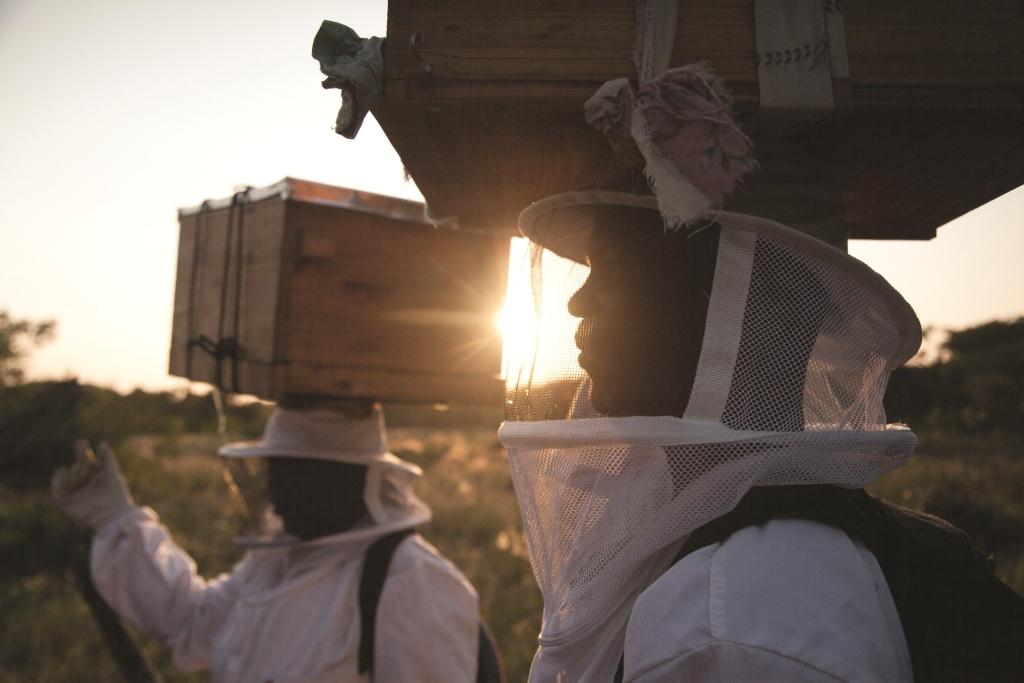
Uganda’s rich vegetation and favorable climate make it particularly hospitable for bees, and the benefits these pollinators impart on the surrounding environments are far-reaching. It turns out it’s not just nature that can profit.
Not long ago, apiculture was commonly looked at as a “lazy man’s job” for “the poorest of the poor,” Birungi Phionah, Program Manager at The Uganda National Apiculture Development Organization (TUNADO), tells FORBES AFRICA. Within the last decade, however, that label is no longer the case, she says.
It’s now hailed as a rare avenue for countryside residents, where income opportunities are usually low. A box planted amongst vegetation is often enough, since bees forage on their own, sparing smallholder farmers the compounding input costs that strain other forms of agriculture.
According to TUNADO’s 2025 report, beekeeping contributed around $61 million to Uganda’s economy that year, supporting over 1 million livelihoods. These figures are by no means small, but other metrics suggest it’s a market vastly untapped.
The same report indicates that honey production reached 15,609 tons last year, nearly a thousand more than the year before. Phionah believes Uganda’s maximum production capacity is 500,000 metric tons per year.
Using 2025’s figures—$61 million and 15,609 tons—yielding 500,000 tons would generate $1.95 billion.
It’s a hefty gap, proving that Uganda’s honey market is more infant than mature. This is partly because, while there is an abundance of Ugandan beekeepers, “the majority of beekeepers are producing small quantities,” Phionah adds, making it difficult for them to enter structured markets.
Identifying this as a significant export and jobs source, Uganda’s Rural Transformation Centers, established by TUNADO, allow beekeepers of any scale to drop off their harvest for it to be processed and sold on the open market.
“We have collection centers so even someone that has 10 kilograms doesn’t sit with it… the northeast and northwestern areas, as well as the southwestern tips… those are the major honey-producing regions where honey goes through the borders,” Phionah says.
While many farmers operate on a micro-level, typically manning five colonies, others adopt practices damaging yield and regeneration. Some sub-regions actively hunt wild beehives, and alongside being a traditional bridal gift in some areas, they burn them to pick the honey.
“It’s not sustainable because they don’t see it again and again… If it is domesticated, then from the same colony, you give it time to reproduce and multiply and produce other colonies, but also you’re able to continue harvesting from the same honey over time,” Phionah explains.
Education is necessary to upend age-old techniques and is why TUNADO is looking to the next generation, upskilling young women and men, while sharing why domestication is the best route to safeguarding colonies and nurturing growth.
You would imagine that the more colonies in action, the closer Uganda gets to reaching its maximum target. And in the process, its ability to diversify the product range from honey to candles to lip balms grows.
“Bees are not only producers of honey and other high-value products; they are indispensable agents of pollination, sustaining agricultural systems and biodiversity. In this regard, investing in apiculture is investing in the resilience of Uganda’s entire food system and natural resource base,” TUNADO’s Chairperson Professor Robert Kajobe wrote in the report.
The Daily Brief
Get the daily FORBES.NG briefing.
Comments (0)
Sign in to join the conversation.
Related Stories

Businesses Are Investing in AI but Struggling to Measure Its Returns
Turning AI pilots into measurable business value requires clear objectives, reliable baselines and disciplined oversight.

Why Businesses Need More Than AI Tools to Compete
Technology alone does not guarantee business results; strategy, staff capability, trustworthy data and measurable goals shape the value of AI.

AI Agents Could Transform Digital Payments, but Trust Remains Essential
Automated tools may streamline payment journeys, but security, consumer consent and clear accountability will shape adoption.
More from Freddie Hiney

Zambia Prepares For El Niño After Previous Droughts Triggered Blackouts
The drought over two years ago had catastrophic consequences for Zambia’s energy security–a nation largely dependent on hydropower, generating over 80% of its electricity, according to government figures. As rivers dried up, the number of blackouts rose. The arriving El Niño—widely expected to become one of the strongest on record and anticipated to grapple the …

‘Thinking Five Years Ahead’: Ethiopia’s $50 Million Bet To Become Billion-Dollar Regional Gold And Metals Hub
Inaugurated on October 10, Ethiopia’s National Precious Metals Refinery coincides with gold’s rising importance for the nation of nearly 140 million people. According to the National Bank of Ethiopia, gold exports rose from $133.6 million in the fourth quarter (Q4) of 2023/24 to $1.29 billion in Q4 2024/25. Welcomed as Ethiopia’s first gold refinery, and …

Interest Rate Rises In South Africa, Experts Evaluate Possibility Of Recession
The financial toll of the ongoing global energy crisis is becoming increasingly apparent for Africa’s biggest economy. On Thursday, the South African Reserve Bank (SARB) announced its decision to increase the interest rate by 25 basis points to 7%, a week after year-on-year head inflation hiked to 4%, up from 3.1% in March. Offering some …
Recommended


The Daily Brief