

As Cargo Traffic Reroutes Off South Africa’s Coast, Look Who Else Is In The Deep End Paying The Price
Due to the current rerouting of global shipping, South Africa’s coastline has also come into sharper focus, seeing a surge in cargo traffic–and with it, the crucial concern over the proximity of vessels to marine mammals and the rising risk of fatal ‘ship strikes’. When Els Vermeulen, Chief Scientist at the University of Pretoria’s Mammal …
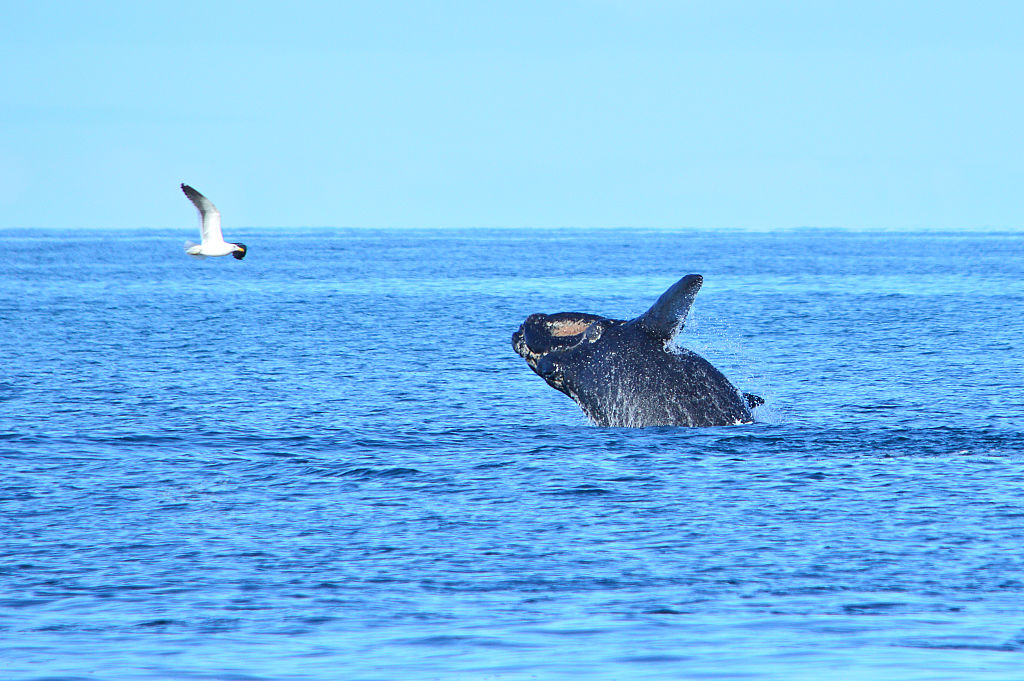
Due to the current rerouting of global shipping, South Africa’s coastline has also come into sharper focus, seeing a surge in cargo traffic–and with it, the crucial concern over the proximity of vessels to marine mammals and the rising risk of fatal ‘ship strikes’.
When Els Vermeulen, Chief Scientist at the University of Pretoria’s Mammal Research Institute (MRI) Whale Unit, noticed an increase in shipping activity around Cape Town, she knew she had to act quickly.
“I get concerned because I know these big vessels are going through large densities of whales,” Vermeulen, who has been aware of several deep-water whale sightings in recent weeks, tells FORBES AFRICA.
Her apprehension was warranted; the International Monetary Fund’s PortWatch report revealed that, between March and April this year, the number of commercial vessels traversing the Cape of Good Hope, the southern tip of South Africa’s Cape Peninsula, had indeed risen.
“One of the biggest threats to whales around the world is what we call a ‘ship strike’… Basically, being hit by ships, which happens most often in areas where you have a high density of whales and a high density of shipping,” Dr Simon Elwen, Director of Sea Search Research & Conservation, concurs to FORBES AFRICA.
When it comes to tracking shipping-related whale mortality, data is limited. Vermeulen correlates this to “cryptic mortality”, whereby most collisions occur deep offshore, and the deceased sink to the ocean floor.
It called for innovative research, which led Vermeulen and her team to overlap the distribution models of numerous whale species around the Western Cape province, with South African shipping routes, to dissect the “probability of a whale encountering a vessel”.
The findings revealed a notable increase in risk due to the current rerouting of global shipping, but Vermeulen admits that determining the population-level consequences for any whale species is difficult.
To overcome this ambiguous barrier, Vermeulen hopes to conduct offshore research by plane or boat. However, they need funding for this exercise, and at a time of heightened economic instability, this has been challenging.
Making matters worse is that this comes weeks before the commencement of South Africa’s infamous winter whale season, but, surprisingly, this doesn’t seem to keep Vermeulen up at night—it’s the summer months that have her worried.
She explains that while winter attracts various whale species, “especially the southern right whales”, who arrive to give birth, they stay close to the coastline. The summer, however, is feeding time.
That’s when South Africa’s West Coast welcomes the Benguela upwelling system, a highly productive marine ecosystem that lures “hundreds of humpback whales, southern right whales, fin whales, and other types of baleen whales… blue whales too.”
“When they reach those densities to come and feed in this region, that’s probably where my concern is highest because whales that are busy feeding might be less attentive to ships.”
Vermeulen also highlights the common sight of humpback “super groups”, adding that the risk of ship strikes rises significantly when they congregate.
“If a ship runs into one of these groups,” Elwen adds, “it can be 100-200 whales in a square kilometer feeding.”
Armed with new research, Vermeulen has ignited talks with the International Whaling Commission, the global body responsible for the conservations of whales, to establish standard shipping procedures for South African waters, exploring speed limitations and redirecting shipping routes further offshore or inshore.
“It’s something we’re discussing , and looking at the science a bit more closely… hopefully within the next couple of months, we will have the right measures in place.”
The Daily Brief
Get the daily FORBES.NG briefing.
Comments (0)
Sign in to join the conversation.
Related Stories

Businesses Are Investing in AI but Struggling to Measure Its Returns
Turning AI pilots into measurable business value requires clear objectives, reliable baselines and disciplined oversight.

Why Businesses Need More Than AI Tools to Compete
Technology alone does not guarantee business results; strategy, staff capability, trustworthy data and measurable goals shape the value of AI.

AI Agents Could Transform Digital Payments, but Trust Remains Essential
Automated tools may streamline payment journeys, but security, consumer consent and clear accountability will shape adoption.
More from Freddie Hiney

Zambia Prepares For El Niño After Previous Droughts Triggered Blackouts
The drought over two years ago had catastrophic consequences for Zambia’s energy security–a nation largely dependent on hydropower, generating over 80% of its electricity, according to government figures. As rivers dried up, the number of blackouts rose. The arriving El Niño—widely expected to become one of the strongest on record and anticipated to grapple the …

‘Thinking Five Years Ahead’: Ethiopia’s $50 Million Bet To Become Billion-Dollar Regional Gold And Metals Hub
Inaugurated on October 10, Ethiopia’s National Precious Metals Refinery coincides with gold’s rising importance for the nation of nearly 140 million people. According to the National Bank of Ethiopia, gold exports rose from $133.6 million in the fourth quarter (Q4) of 2023/24 to $1.29 billion in Q4 2024/25. Welcomed as Ethiopia’s first gold refinery, and …

Interest Rate Rises In South Africa, Experts Evaluate Possibility Of Recession
The financial toll of the ongoing global energy crisis is becoming increasingly apparent for Africa’s biggest economy. On Thursday, the South African Reserve Bank (SARB) announced its decision to increase the interest rate by 25 basis points to 7%, a week after year-on-year head inflation hiked to 4%, up from 3.1% in March. Offering some …
Recommended


The Daily Brief