

Powering Sustainability, and Redefining Responsibility In Africa’s Green Future
Africa’s green future lies in its own hands. Bold, visionary, and driven by boundless energy, committed leaders, policymakers, startups, and communities are working together to address the continent’s pressing environmental challenges while ensuring a climate-resilient future for all. Meeting this future, however, won’t come cheap: Africa will need an estimated $2.7 trillion by 2030 to …

Africa’s green future lies in its own hands. Bold, visionary, and driven by boundless energy, committed leaders, policymakers, startups, and communities are working together to address the continent’s pressing environmental challenges while ensuring a climate-resilient future for all. Meeting this future, however, won’t come cheap: Africa will need an estimated $2.7 trillion by 2030 to respond effectively to climate change. Sustainable solutions are no longer optional; they are an urgent imperative that demands intention, inclusivity, and investment.
From boardroom heavyweights to bold entrepreneurs and grassroots eco-warriors, Africa’s sustainability leaders are not just raising awareness about climate change—they’re transforming challenges into opportunities and turning visionary ambitions into real-world impact.
It’s a well-known fact that the continent has been and will continue to be disproportionately affected by climate change, despite only contributing a reported 2%-4% of global greenhouse gas emissions.
Particularly concerning is the fact that, on average, countries on the continent are losing 2%-5% of their gross domestic product (GDP), with some having to divert up to 9% of their budgets, in response to climate extremes, per the State of the Climate in Africa 2023 report by the World Meteorological Organization.
The report goes on to state that in sub-Saharan Africa (SSA), the cost of adaptation is estimated to range from $30 billion-$50 billion annually, over the next decade, or 2%-3% of the region’s GDP.
The African Development Bank’s (AfDB) African Economic Outlook previously estimated that the continent would need around $2.7 trillion by 2030 to respond adequately to climate change.
“Africa is a hub of climate solutions. We have an abundance of renewable energy. We have an abundance of critical minerals needed for the future energy demands. We have the youngest and fastest-growing workforce,” says Kenyan environmentalist and activist, Wanjira Mathai. “One in every five people on this planet will be African by 2050–the future of this world is African, and we need to lean into the reality that we have got to invest today for that tomorrow to make sense.”
However, the challenges that plague the continent can’t be overlooked.
From weak infrastructure to limited adaptive capacity and the continent’s reliance on rain-fed agriculture, per the AfDB, climate change effects are already evident. These include extreme weather patterns and events, prolonged droughts, erratic rainfall, and rising temperatures, all of which are a threat to food security, livelihoods, and ecosystems.
Sustainable solutions are not optional anymore, but rather an imperative that must be tackled with intention, inclusivity and investment.
ESG And Sustainability
Collaboration is a key factor as the continent looks to tackle its climate concerns. Policy development and assurances are needed from governments, and investment and strategic momentum from private stakeholders, both on and off the continent, amongst other factors.
As an example, the European Union announced a €4.7 billion ($5.5 billion) Global Gateway investment in South Africa at the EU-South Africa Summit in Cape Town in the first quarter of 2025, reportedly marking the initiation of negotiations for a Clean Trade and Investment Partnership.
And while numbers vary, the private sector on the continent is responsible for the majority of total economic output and the creation of employment opportunities. As such, companies have a particularly significant role in addressing sustainability and the promotion of ‘green growth’.
In South Africa, in particular, Claire Bradbury, Sustainability Lead for Accenture, Africa, tells FORBES AFRICA that the urgency of climate-related impacts is a daily reality.
“If companies don’t prioritize sustainability, they risk being left behind; they risk losing competitive advantage and they risk enormous exposure to climate risk, and physical and transition risk. It’s absolutely an existential threat,” she explains. “Consistency is key and the ambition is all the more important because we can see day-to-day, what happens when these risks aren’t dealt with up-front.”
Bradbury also emphasizes the disruption of supply chains and critical pieces of infrastructure, and the exacerbation of public health and sanitation risks, if climate change isn’t dealt with effectively.
“It’s really important to just be aware of hyperbole; especially at the moment. We’ve got this simmering idea of multipolarity in the world; and the optics of the fragmentation of consensus that was reached for the Paris Agreement, for example,” she says, adding: “We need to be really careful–everyone working in sustainability in business or government; we have to hold the course.”
One thing is clear: for the continent to take full advantage of the opportunities as its disposal, and with the youngest population in the world–70% of SSA is under the age of 30–true impact can only be achieved when the work is done together.
The Daily Brief
Get the daily FORBES.NG briefing.
Comments (0)
Sign in to join the conversation.
Related Stories

Businesses Are Investing in AI but Struggling to Measure Its Returns
Turning AI pilots into measurable business value requires clear objectives, reliable baselines and disciplined oversight.

Why Businesses Need More Than AI Tools to Compete
Technology alone does not guarantee business results; strategy, staff capability, trustworthy data and measurable goals shape the value of AI.

AI Agents Could Transform Digital Payments, but Trust Remains Essential
Automated tools may streamline payment journeys, but security, consumer consent and clear accountability will shape adoption.
More from Nicole Pillay

The Impact Of Foundational Learning On Africa’s Future Workforce
Room to Read, on a mission to tackle illiteracy and gender inequality, is working to ensure that all children have the resources to read, learn and grow–in turn, creating lasting change. An influx of investments within and outside the continent as well as the development of Africa’s creative economy, and business spheres, have brought foundational learning skills to the fore. Room to Read–an organization which aims to nurture these skills in the youth–has placed particular focus on this. Founde
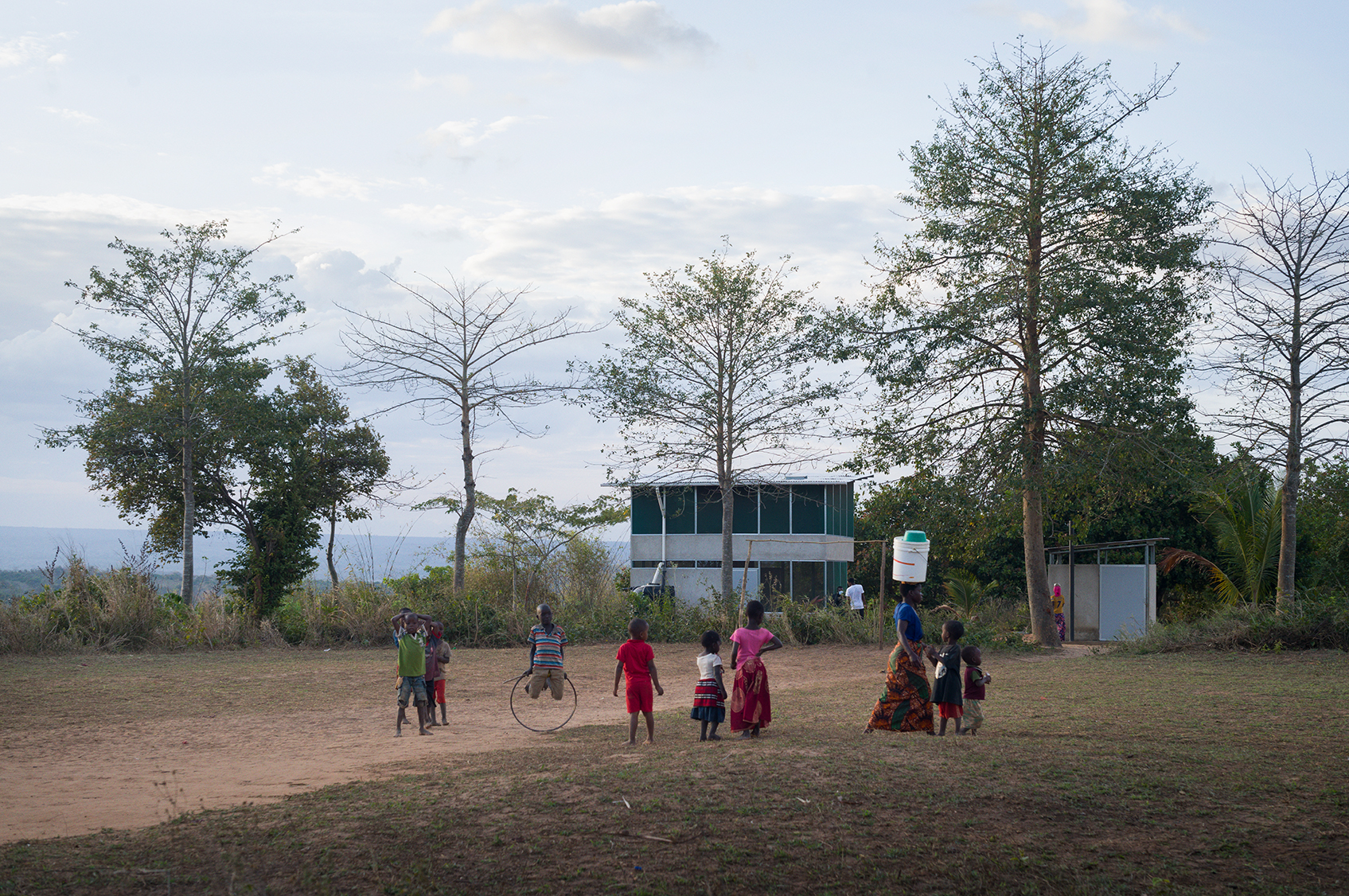
Forward-Focused Foundation: Tanzanian Housing Study Showcases Potential Public Health Impact
Reported as ‘the first household randomized controlled trial of a purpose-built healthy house’, it could inform a rethink of housing solutions in several areas across sub-Saharan Africa. A three-year randomized, controlled trial, conducted in the Mtwara region of Tanzania, highlights the potential and significance of purpose-built architecture, with results showing a drop in malaria and respiratory infections in occupants of specially-designed, two-story homes. According to the report, during t
The Impact Of Foundational Learning On Africa’s Future Workforce
Room to Read, on a mission to tackle illiteracy and gender inequality, is working to ensure that all children have the resources to read, learn and grow–in turn, creating lasting change. An influx of investments within and outside the continent as well as the development of Africa’s creative economy, and business spheres, have brought foundational learning skills to the fore. Room to Read–an organization which aims to nurture these skills in the youth–has placed particular focus on this. Founde
Recommended


The Daily Brief