

Making Financial Services Available To West Africa’s Underserved Communities
Words and Curation: Oluwatomisin AmokeojaAdditional Reporting: Chanel Retief and Nicole PillayArt Director: Manelisi Dabata “We set out to make world-class financial services available to everyday consumers and businesses so that a student in Benin, a market trader in Kano or a salary earner in Lagos could all transact, save and grow their businesses with the same ease as …

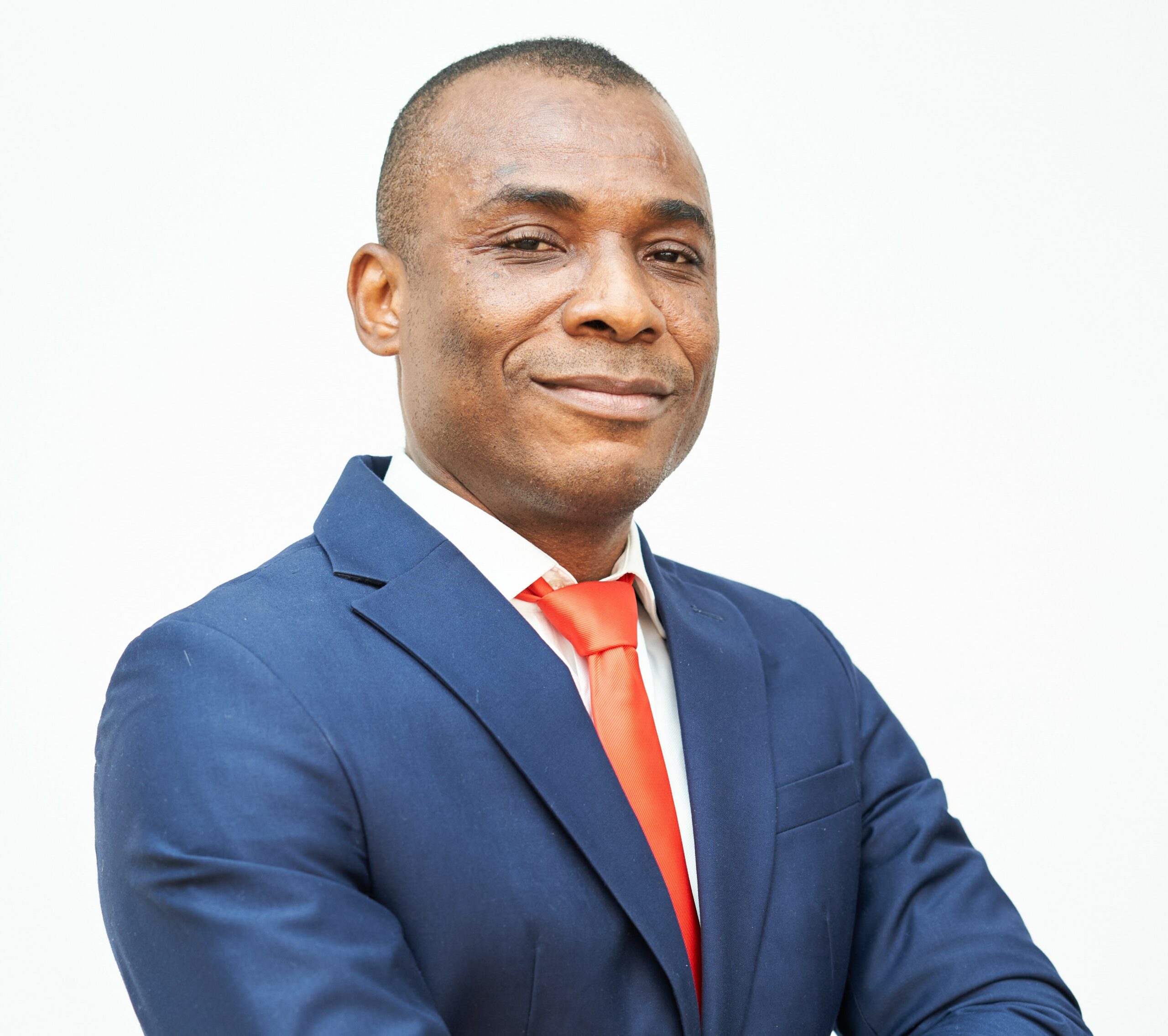
Words and Curation: Oluwatomisin Amokeoja
Additional Reporting: Chanel Retief and Nicole Pillay
Art Director: Manelisi Dabata
“We set out to make world-class financial services available to everyday consumers and businesses so that a student in Benin, a market trader in Kano or a salary earner in Lagos could all transact, save and grow their businesses with the same ease as someone in London.”
In the palm of one’s hands–that’s how easy accessing money should be. However, that is not always the case. It is also why, for this fintech, the mission was clear from the very beginning.
“Before we launched, if you knew the Nigerian terrain well, you’d understand that more than half of adults were unbanked, and cash dominated everyday commerce,” Chika Nwosu says.
He adds that even those with bank accounts, cards, or those transacting through banks still often preferred to use cash—largely because of service issues and high failure rates. At the time of PalmPay’s inception, for example, failure rates were as high as 20%. Sometimes, upon making a transfer, Nwosu says money would hang and if people needed to use POS systems, they would encounter one problem after another.
“When you went to the bank to resolve it, the experience was often frustrating. That was one of the major reasons we started,” he tells FORBES AFRICA.
“We set out to make world-class financial services available to everyday consumers and businesses so that a student in Benin, a market trader in Kano or a salary earner in Lagos could all transact, save and grow their businesses with the same ease as someone in London.”
PalmPay focuses on three areas: distribution, network reliability, and affordability; this is to ensure that they enable cost-effective and wide-reaching distribution by reaching underserved populations. Nwosu says this was developed via their smartphone-based banking app and built on a nationwide network of over a million mobile money agents and merchants.
“We operate in all 774 local government areas in Nigeria. We’ve made it a priority to reach even the most rural areas. When it comes to reliability, we have a transaction success rate of over 99.9% on the platform,” he says.
“And, in terms of affordability, we offer free transfers. Many banks charge around 53 naira ($0.03) or even up to 100 naira ($0.06) as a surcharge—but with us, it’s completely free.”
For PalmPay, their philosophy is a simple one: tackle financial inclusion. “We are doing in Nigeria to ensure that we provide the best financial services to our users.”
The Daily Brief
Get the daily FORBES.NG briefing.
Comments (0)
Sign in to join the conversation.
Related Stories

Businesses Are Investing in AI but Struggling to Measure Its Returns
Turning AI pilots into measurable business value requires clear objectives, reliable baselines and disciplined oversight.

Why Businesses Need More Than AI Tools to Compete
Technology alone does not guarantee business results; strategy, staff capability, trustworthy data and measurable goals shape the value of AI.

AI Agents Could Transform Digital Payments, but Trust Remains Essential
Automated tools may streamline payment journeys, but security, consumer consent and clear accountability will shape adoption.
More from FORBES.NG

CEOs Say Layoffs Are AI’s Fault—But Some Experts Think Companies Are Lying
Topline Businesses implementing artificial intelligence was blamed for more layoffs than any other reason for the second month in a row in April, new data shows but some experts have said they think technology companies, which use the excuse more than any other sector, are using AI as a smokescreen to hide larger internal struggles. …
Hantavirus Cruise Passengers Will Disembark Sunday (Latest Updates)
Topline Passengers on the hantavirus-stricken MV Hondius cruise ship will soon be evacuated in an operation that will be directly observed by the World Health Organization’s director-general, who said Saturday travelers will be taken to their respective countries as various governments differ on how they will receive and monitor their citizens. This story was first published on …
WHO Declares Ebola Outbreak In Africa ‘Extraordinary’ Public Health Emergency
Topline The World Health Organization declared the Ebola outbreak in the Democratic Republic of the Congo and Uganda a public health emergency of international concern late on Saturday night, after public health authorities identified 246 suspected cases and 80 suspected deaths from the disease in the Congo caused by a virus with no approved specific …
Recommended


The Daily Brief